Most outreach failures begin with a category error. A brand asks for "guest posts" when what they need is editorial visibility. An agency pitches digital PR when the client's actual problem is indexation speed. A marketing director budgets for "link building" without defining whether the goal is brand awareness, search rankings, referral traffic, or all 3. The terminology has become so muddled that entire campaigns are built on mismatched expectations.
The confusion is not accidental. For over a decade, the SEO industry has treated sponsored content, guest posting, and digital PR as interchangeable terms for "getting a link on someone else's website" They are not interchangeable. They serve different strategic purposes, operate under different editorial models, carry different risk profiles, and produce different measurable outcomes. Using the wrong approach for the right goal is how marketing budgets disappear without a trace.
This analysis breaks down the 3 approaches with the strategic clarity they deserve. It examines how each one works, what it costs in practice, what it delivers in measurable terms, and which business situations each is best suited for. The goal is not to declare a winner. It is to give you a decision framework, so you stop choosing tactics by default and start choosing them by design.
What Sponsored Content Actually Is and How It Functions Strategically
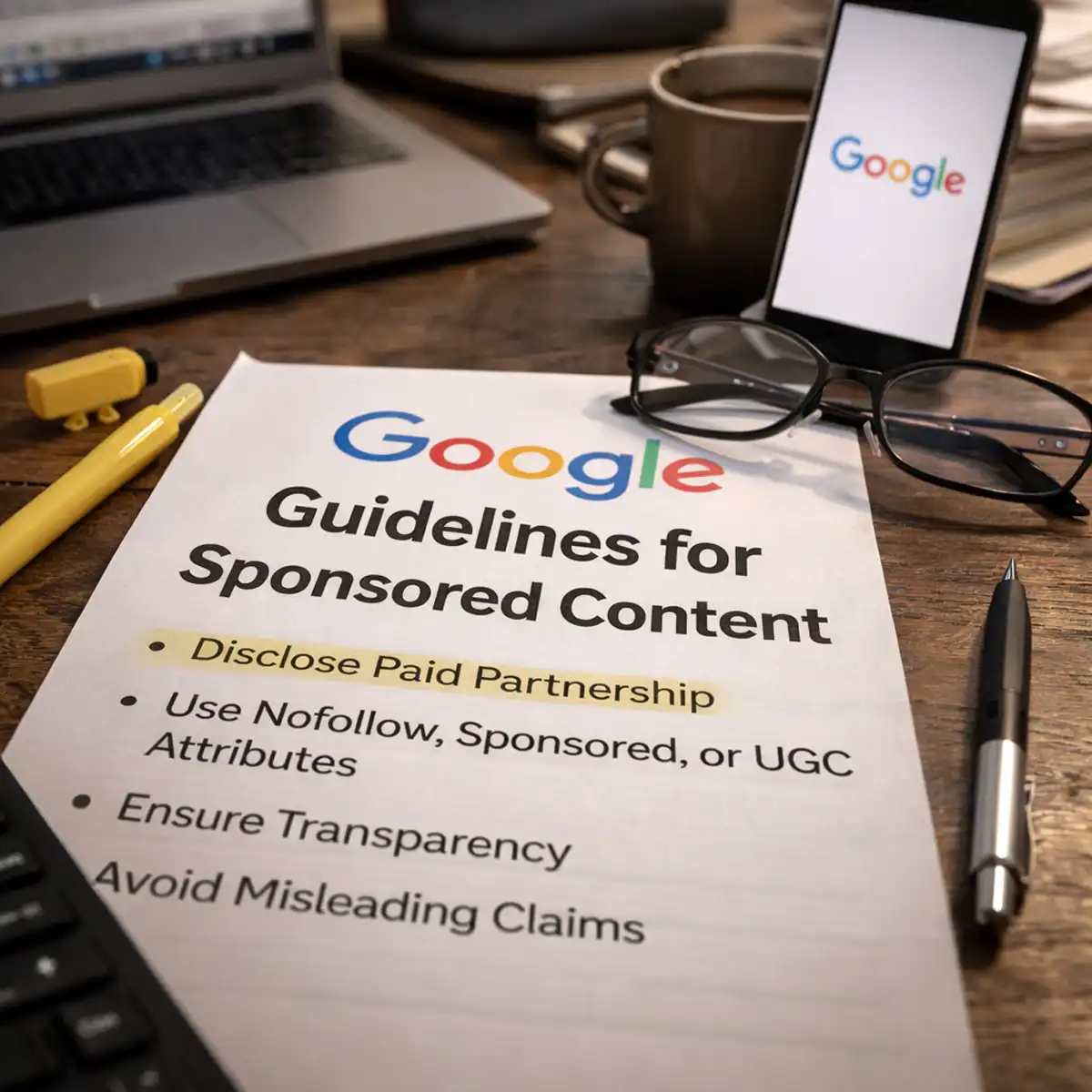
Sponsored content is a paid editorial placement on a third-party publication. The brand pays the publisher to feature an article, guide, or profile within the publication's editorial environment. The content is disclosed as sponsored. The link, if present, uses the "sponsor" attribute. The value lies in the editorial context, audience access, and the brand endorsement that comes from being published alongside a trusted publication's own journalism.
Strategically, sponsored content sits at the intersection of advertising and editorial. It is how the Financial Times funds its partner content studio. It is how Forbes runs its BrandVoice programme. It is how niche publications across every industry sustain themselves while providing brands with access to precisely targeted audiences. The model is as old as advertorials in print magazines, updated for a digital environment where targeting is sharper and measurement is immediate.
The strategic advantage of sponsored content is control combined with context. You control the message. The publication provides credibility. A placement on a niche-relevant website puts your brand in front of an audience that the publication has spent years building. You are borrowing trust that would take your own website a decade to earn independently. That is the proposition, and at its best, it delivers on all fronts: brand visibility, search signals, referral traffic, and lasting indexation benefits.
How Guest Posting Differs in Editorial Model and Risk Profile
Guest posting, in its original form, is contributed content published under a named author on a third-party site. The author provides expertise. The publication provides the platform. No money changes hands. The editorial value is mutual: the publication gets free content; the author gets exposure and a byline link.
That model still exists in respected publications. Search Engine Journal, Moz, and HubSpot all accept contributed content from practitioners who can demonstrate genuine expertise. These placements are editorially rigorous, difficult to secure, and extremely valuable because they require the author to provide original insight rather than promotional copy.
The problem is that "guest posting" has become an umbrella term for something much broader and much less rigorous. In 2025, a significant portion of what the SEO industry calls guest posting is effectively paid placement on low-editorial-standard websites that accept content from anyone willing to pay or exchange links. These sites carry a higher risk. Google's SpamBrain system, updated throughout 2025 with enhanced link graph analysis, is specifically designed to identify and devalue patterns associated with large-scale, low-quality guest posting networks.
The strategic distinction is important. Genuine guest posting on respected publications remains one of the most effective ways to build personal and brand authority. Mass-produced guest posting on sites that exist primarily to host paid content carries real algorithmic risk. The terminology is the same. The outcomes are completely different. Brands that conflate the 2 make expensive mistakes.
Where Digital PR Fits and Why It Requires a Different Skill Set
Digital PR is the practice of earning editorial coverage through newsworthy stories, data-driven research, expert commentary, or creative campaigns that journalists and editors choose to cover because the content has genuine news value. No payment is involved. The link is earned because the journalist considers the source credible and the story relevant to their audience.
The distinction between sponsored content and guest posting is fundamental. Digital PR requires you to create something genuinely newsworthy. A data study that reveals industry trends. A survey with findings that challenge assumptions. An expert perspective on a breaking story. The skill set is closer to traditional journalism and public relations than to SEO. The best digital PR campaigns are run by people who understand how newsrooms work, what makes a story publishable, and how to pitch at the right moment.
The strategic advantage of digital PR is scale and authority. A single successful campaign can generate coverage across dozens of publications simultaneously, including major national media. The links earned are editorially natural, carry no sponsored disclosure, and are treated by Google's systems as organic endorsements. A 2024 BrightonSEO presentation analysing 1,200 digital PR campaigns found that the average successful campaign generated 47 linking root domains within 30 days.
The disadvantage is unpredictability. Digital PR campaigns can fail entirely. You can invest weeks in research and pitching without securing a single placement. The output is not guaranteed. Sponsored content, by contrast, offers guaranteed publication on a known platform. This is the core strategic trade-off: guaranteed placement with disclosure versus earned coverage with uncertainty.
Fun fact: The world's first recognisable advertorial appeared in the New York Tribune in 1915, promoting a novel by disguising it as a book review. Over a century later, the tension between editorial independence and commercial content remains the defining question for every publication that accepts outside contributions.
A Decision Framework for Choosing the Right Approach
The right approach depends on your goal, your timeline, and your tolerance for uncertainty. Here is a framework that removes the guesswork.
Choose sponsored content when you need guaranteed placement on a specific publication, when your goal is brand visibility within a defined niche audience, when you need to control the message and positioning, or when indexation acceleration for specific pages is a priority. Sponsored content is the most predictable of the 3 approaches. You select the publication, agree on the content, and receive a published feature on a known date. The trade-off is cost and disclosure.
Choose guest posting when you or someone on your team has genuine expertise to contribute, when you can secure placement on a publication with real editorial standards, and when building a personal brand alongside a company brand is strategically important. Do not choose guest posting as a volume tactic on low-quality sites. The risk now outweighs the diminishing returns.
Choose digital PR when you have a genuinely newsworthy story, data asset, or expert perspective, when you want coverage at scale across multiple publications, when your goal is building domain-wide authority signals rather than page-specific link equity, and when you have the budget and patience for a process with uncertain timing. Digital PR is the highest-ceiling approach. It is also the highest variance.
The most effective strategies combine all 3. Use sponsored content for guaranteed, niche-relevant placements that serve specific SEO and brand objectives. Use genuine guest posting to build thought leadership. Use digital PR to generate headline coverage and broad authority signals. The proportions depend on your industry, your budget, and your team's capabilities.
Why the Category Error Costs More Than the Wrong Tactic
The real cost of confusing sponsored content, guest posting, and digital PR is not the budget spent on the wrong channel. It is the strategic opportunity lost. A brand that needs indexation support and invests entirely in speculative digital PR may wait months for results that a targeted sponsored editorial placement could have delivered in days. An agency that runs mass guest posting campaigns when the client needs brand credibility is generating activity, not value.
The language matters because the strategy matters. Define what you need first. Choose the approach that serves that need. Measure the result against the original objective. If you start with the tactic and work backwards to the goal, you will always end up rationalising outcomes instead of engineering them.
Sponsored content gives you certainty and context. Guest posting gives you credibility and thought leadership. Digital PR gives you scale and earned authority. There are 3 different instruments. The best marketers know when to play each one.